
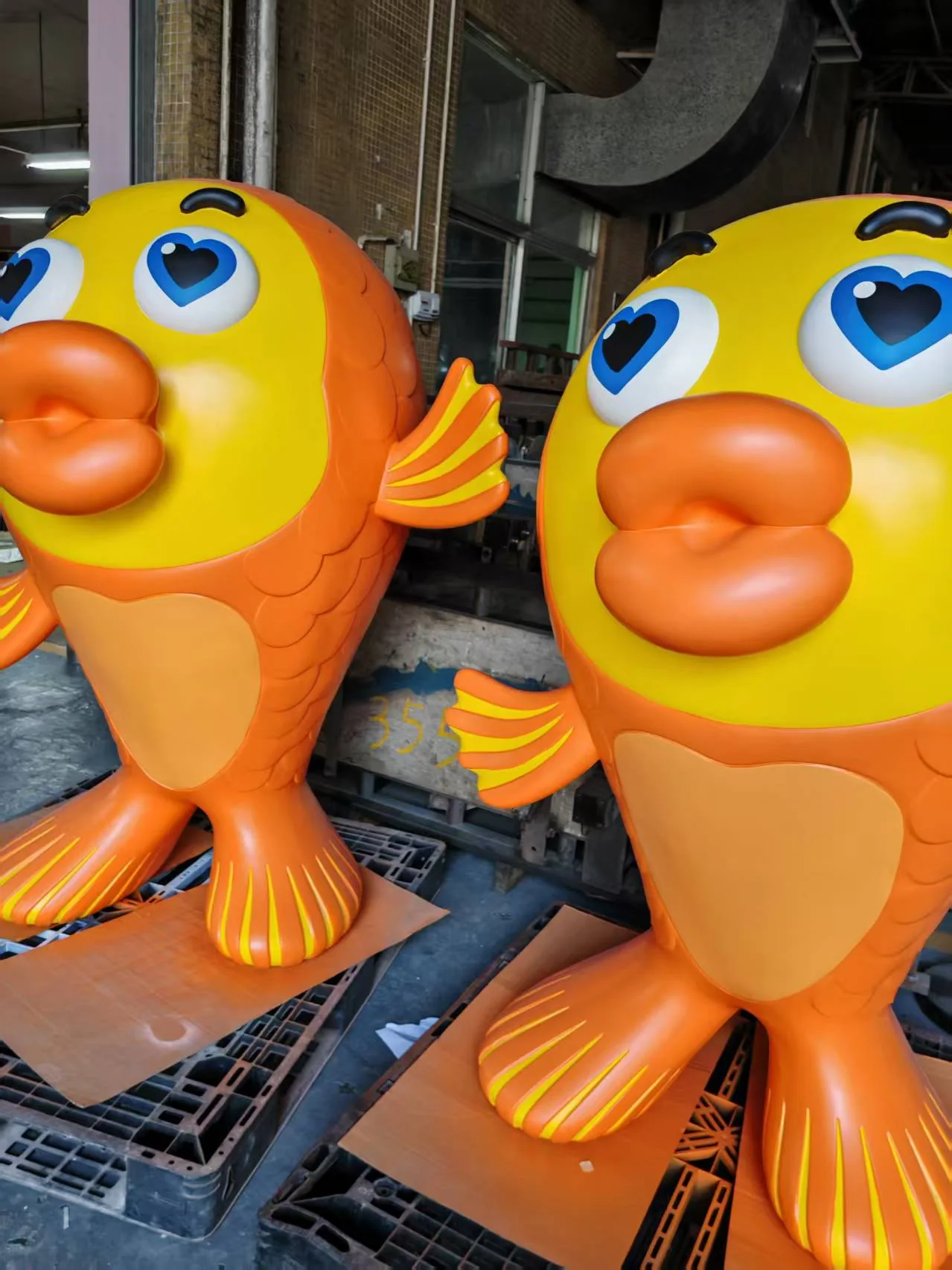
What can you send if you do not have a 3D file?
Send the material you already have: a mascot illustration, a campaign rendering, character reference sheets, photographs of an existing figure or a combination of these. Include the approximate finished dimensions and explain where the statue will be displayed.
Useful supporting information includes:
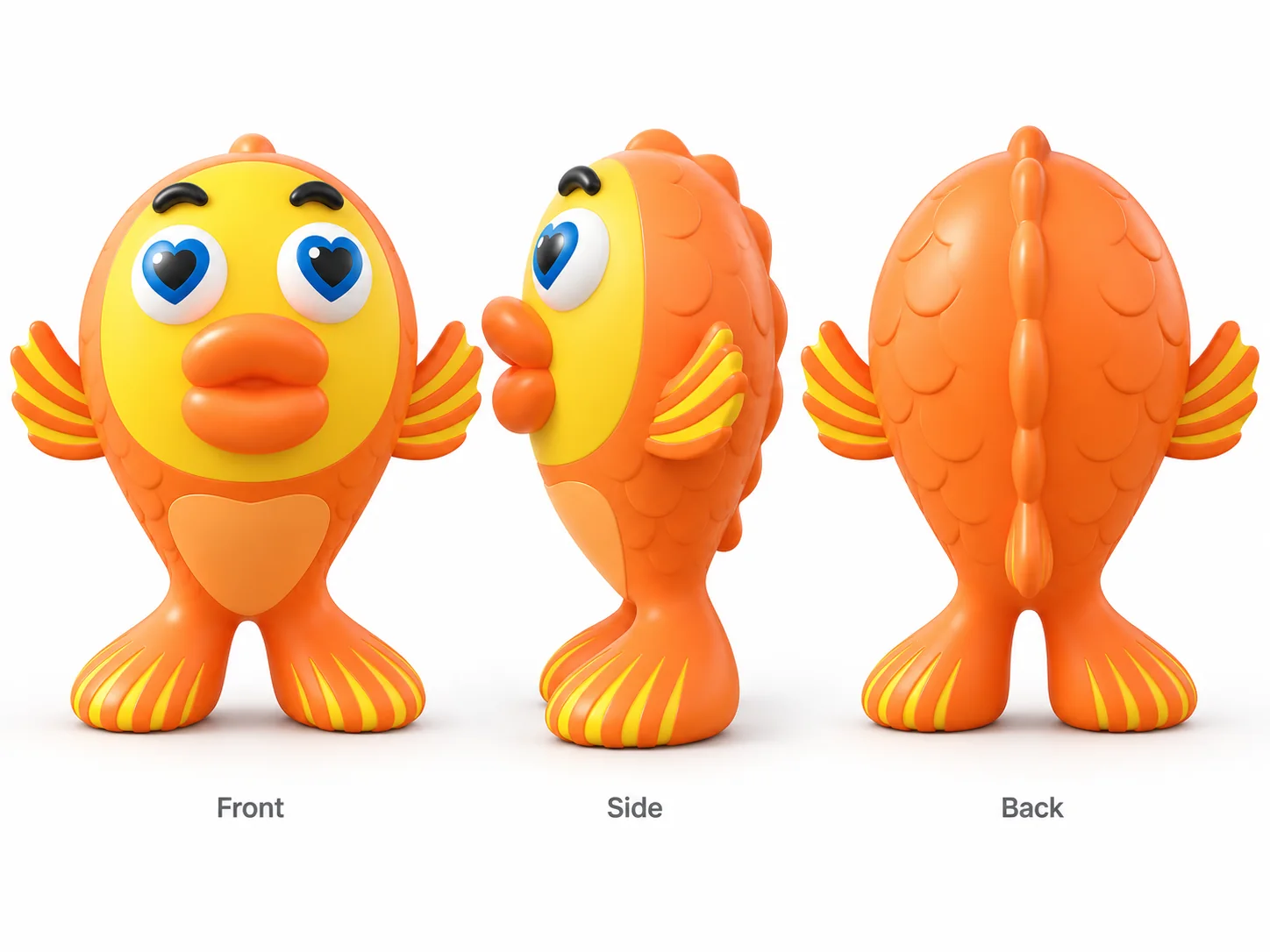
- Front, side and rear views, if available
- The pose and facial expression that must be preserved
- Overall height, including whether it includes the base
- Brand colors, logos and graphic artwork
- Required quantity and whether the pieces share the same design
- Indoor or outdoor use, display base and any access restrictions
You can begin with one view. The review should establish which features are already defined and which need further input or a proposal for your approval. Multiple views help only when they agree: if the side and front images depict different proportions, identify the reference that should take priority.
For a broader inquiry checklist, see what information is needed for a custom sculpture quote.
How is a rendering different from a production model?
A rendering shows the intended appearance from a particular viewpoint. Even a rendering created with 3D software is still an image unless the underlying model is supplied. It does not automatically provide editable geometry, physical dimensions or fabrication details.
A 3D model defines shape in three dimensions, but its purpose matters. A model made for animation or visualization may contain details that need adjustment at display scale, separate surfaces that need resolving, or components with no agreed physical connection.
| Available material | What it helps define | What still needs review |
|---|---|---|
| Illustration or front-view artwork | Character identity, expression, colors and silhouette | Depth, hidden surfaces and how the pose becomes a physical form |
| Multiple renderings | Appearance from several angles | Agreement between views, dimensions and access to the underlying geometry |
| Existing 3D model | Three-dimensional form and component relationships | Scale, fabrication suitability, support, connections and finish requirements |
| Agreed production model and supporting specifications | Reviewed form and project requirements | Any remaining approvals identified before the next production stage |
A model is therefore part of a production package. It does not replace the agreed color references, assembly requirements or approval record.
Who defines the back and other unseen details?
The buyer should identify any existing character rules or reference views first. If the rear of the head, clothing, hands or accessories has not been designed, a proposed interpretation can be developed within the agreed modeling scope and submitted for review.
For example, a front rendering might show a mascot holding a sign without showing the rear of the sign or how it connects to the hand. The production review needs to resolve both the visible appearance and the connection. The buyer should approve any change that affects the character or display composition.
YAVIS works from client designs, renders and references. Modeling and engineering development for production translate that design into a practical object; they are different from creating an original mascot identity or brand concept. Confirm responsibility for the modeling work, its deliverables and revision process at quotation stage.
What should be approved in the 3D review?
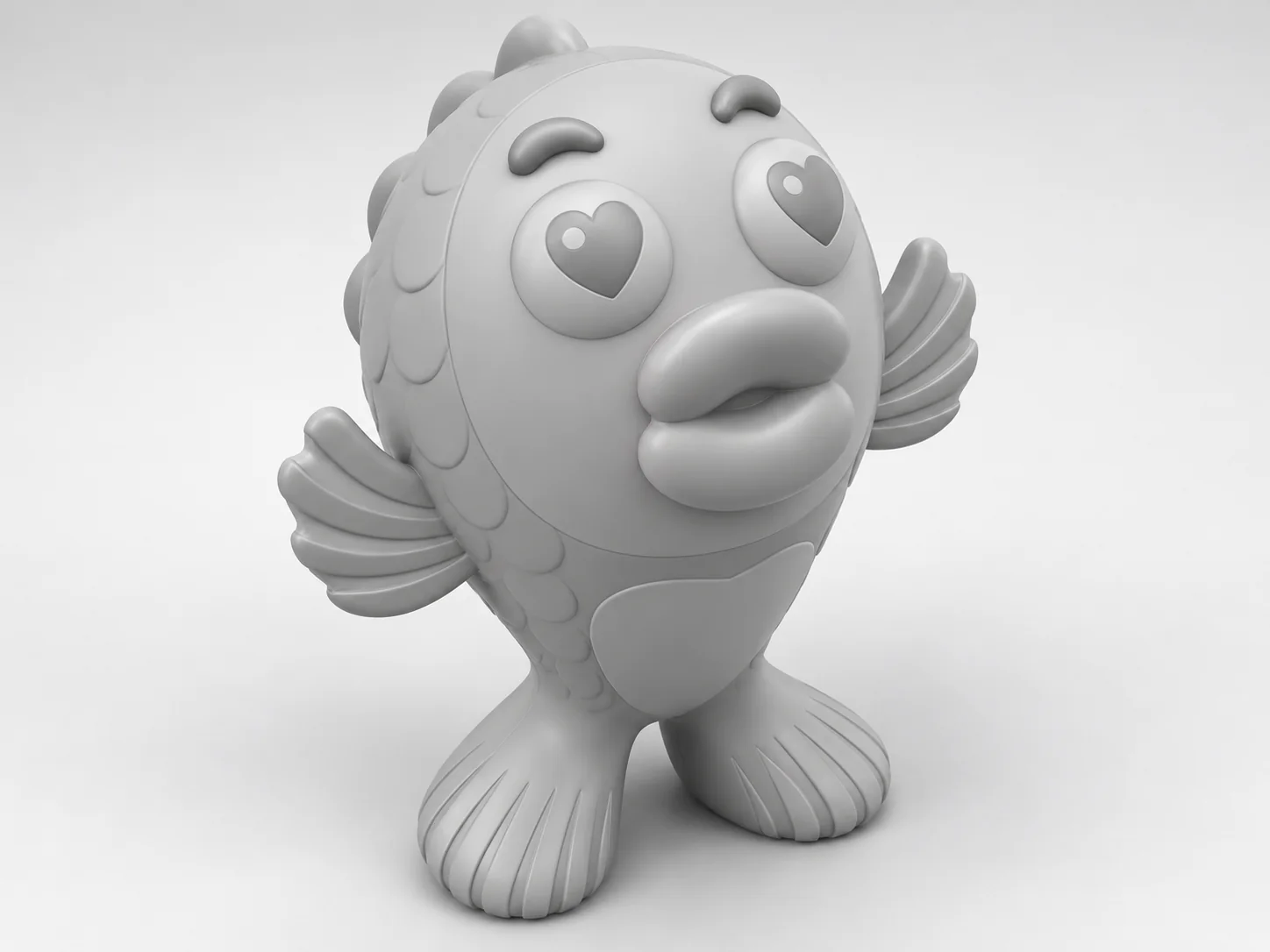
Review the model from more than the original rendering angle. A statue may be seen from the side, behind or close up in a retail or exhibition environment.
Pay particular attention to:
- Head-to-body proportion and overall silhouette
- Face, expression and position of key features
- Pose, body depth and the space between limbs
- Accessories and their relationship to the character
- Foot placement, base outline and finished dimensions
- Proposed separation lines where parts will connect
Record the model version, the views reviewed and any open items. Approval of the shape should not be treated as approval of an unreviewed paint finish. Color, gloss and graphics need their own agreed references.
A fish-shaped mascot, for example, needs review of the body depth, projecting lips, fin shapes and the way the tail meets the floor or base. A view that looks correct from the front may still leave these relationships unresolved from the side or rear.
What engineering decisions follow from the design?
Production planning considers how the statue will stand, be fabricated, move through doorways and travel to its destination. A narrow ankle, extended arm or projecting accessory may affect the proposed construction or packing arrangement.
Discuss the display environment, base, fixing method and any detachable components while the form is being resolved. Structural support is project-specific: it should not be added or omitted simply because another statue used a particular arrangement.
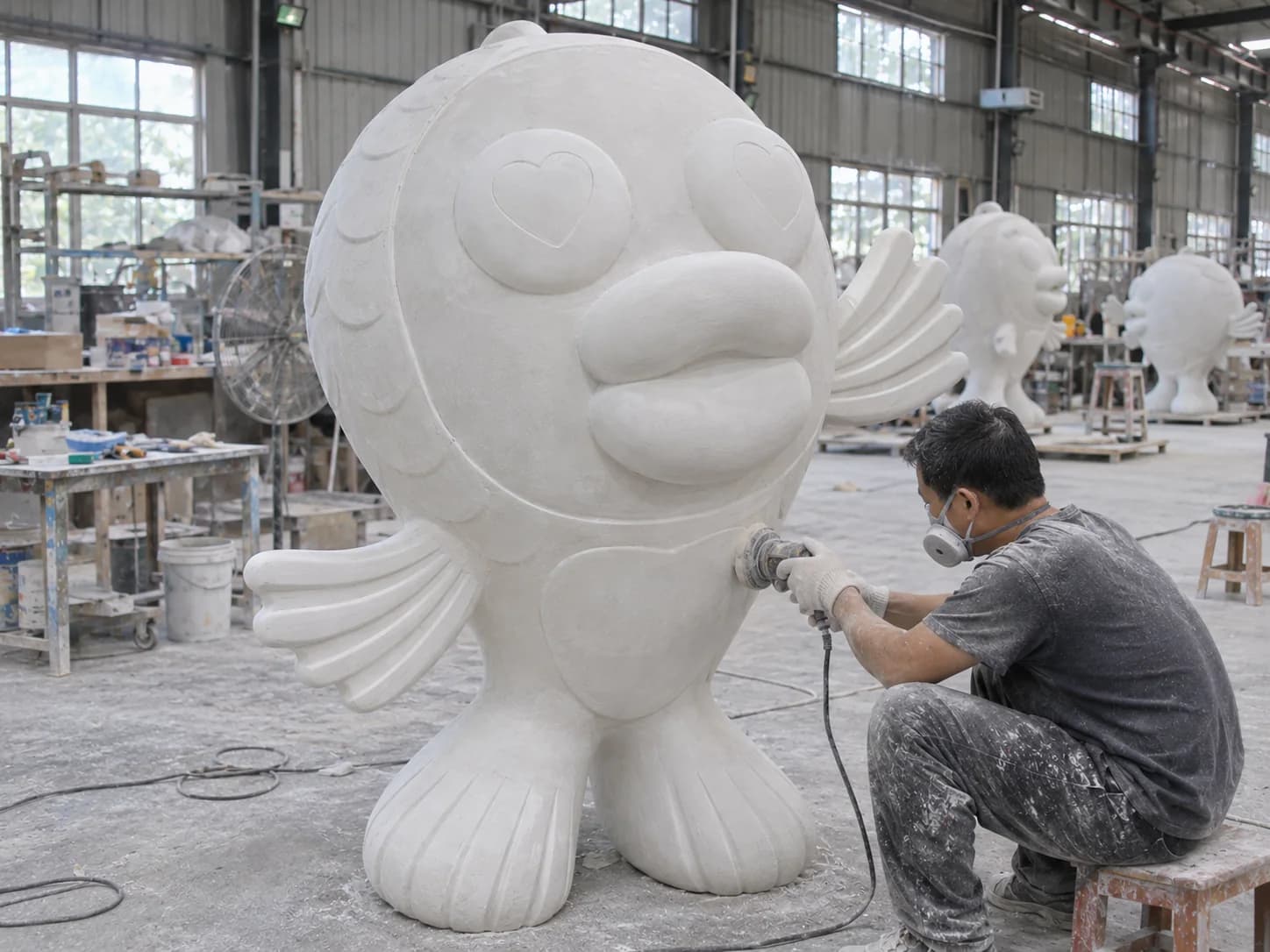
For a fiberglass mascot statue, modeling may be followed by a physical pattern or first article, mold preparation, FRP fabrication and surface finishing. The appropriate sequence depends on the form, quantity and chosen production method. A one-off piece does not automatically require the same tooling route as a repeat order.
The physical form also needs surface preparation before its final finish is applied. Filling, sanding and refinement address the fabricated surface; they are separate from approving the digital shape or the intended paint colors.
Explore custom mascot statue manufacturing for the service scope, or custom fiberglass sculptures for related fabrication applications.
How do digital review and physical approval work together?
Digital review helps establish the form and dimensions before physical production. A physical first article can then help buyers assess how the character reads at the intended scale. The approval plan should specify whether that physical sample confirms geometry only or also includes finish and assembly details.
In the Treezo project, YAVIS manufactured 100 molded fiberglass mascot statues, approximately 1,100 mm tall including the circular base. A 3D-printed first article was used for formal confirmation before repeat production. The project records also include a dimensional model and finished sculptures.
This example shows how model review and physical confirmation can support a production order. The appropriate approval sequence should be agreed for each project; a full-size printed first article is not required for every mascot.
See the Treezo mascot manufacturing case and the detailed guide to how the 100 fiberglass mascot statues were produced.
When can a manufacturer quote from a rendering?
A rendering with approximate dimensions, quantity and intended use may be enough for a preliminary estimate. The estimate should identify unresolved assumptions, such as hidden geometry, finish complexity, support or modeling work.
Clarify whether production modeling is included, separately priced or dependent on reviewing the available files. Also agree on the required deliverables, revision scope and any file handover expectations. Do not assume that commissioning a physical statue automatically includes every editable working file.
A firm production quotation requires the important manufacturing decisions to be sufficiently defined. If the design changes during model review, the quotation may need to change as well.
How do modeling and revisions affect the schedule?
Allow for model development, buyer review and any agreed physical approval before fabrication. More time may be needed when the reference has only one view, several designs need separate development, or feedback changes the pose, dimensions or accessories.
Agree on who consolidates comments and which version controls the next stage. A change made before approval is different from a change requested after a pattern, mold or finished component has been produced. Review the cost and schedule effect before proceeding.
The project timeline should therefore distinguish development and approvals from fabrication, finishing and delivery. There is no single modeling or production duration that fits every mascot design.
What changes for one piece versus a batch?
For a single commercial mascot, the approval process can focus on that piece’s form, finish and installation requirements. For a batch, it also needs to define the reference that subsequent pieces will match.
Confirm whether the order repeats one design or contains several unique forms. Ten different designs may need ten separate form reviews; ten copies of one design have a different development scope. The numbers alone do not describe the work.
Once the reference is approved, repeat production needs controls for both forming and finishing. See how statue manufacturers manage repeat production and quality consistency for those later stages.
Frequently asked questions
Can you review a project from just one mascot image?
Yes. One clear image and approximate dimensions can start a feasibility discussion. Additional views or an approved interpretation of unseen details may be needed before production requirements can be finalized.
Do I have to commission a 3D model before contacting YAVIS?
No. Send the references you already have. YAVIS can review the manufacturing requirements and discuss any modeling needed for the proposed production route.
Is an existing 3D model automatically ready for manufacturing?
No. Its scale, geometry, components and suitability for the chosen fabrication process need review. Support, assembly and finish requirements also need to be agreed.
Does approving the model also approve the final colors?
Not automatically. The approval record should state what has been confirmed. Form, color, gloss, graphics and physical assembly may require different references or approval stages.
Will every mascot statue require a physical prototype?
No. The appropriate approval method depends on complexity, quantity, production method and project risk. Confirm whether a model review, sample, first article or combination is appropriate before production begins.
Send the design information you already have
A complete production model is not a prerequisite for a useful first conversation. Share your mascot artwork or rendering, approximate size, quantity, intended environment and destination. Identify the character features that must remain unchanged and any design decisions that are still open.
YAVIS manufactures commercial sculptures from client designs, renders and references, with modeling and engineering requirements reviewed as part of the project scope. Send your project references to discuss the next steps toward production.