Project at a glance
| Item | Confirmed project specification |
|---|---|
| Project | Treezo brand mascot sculptures |
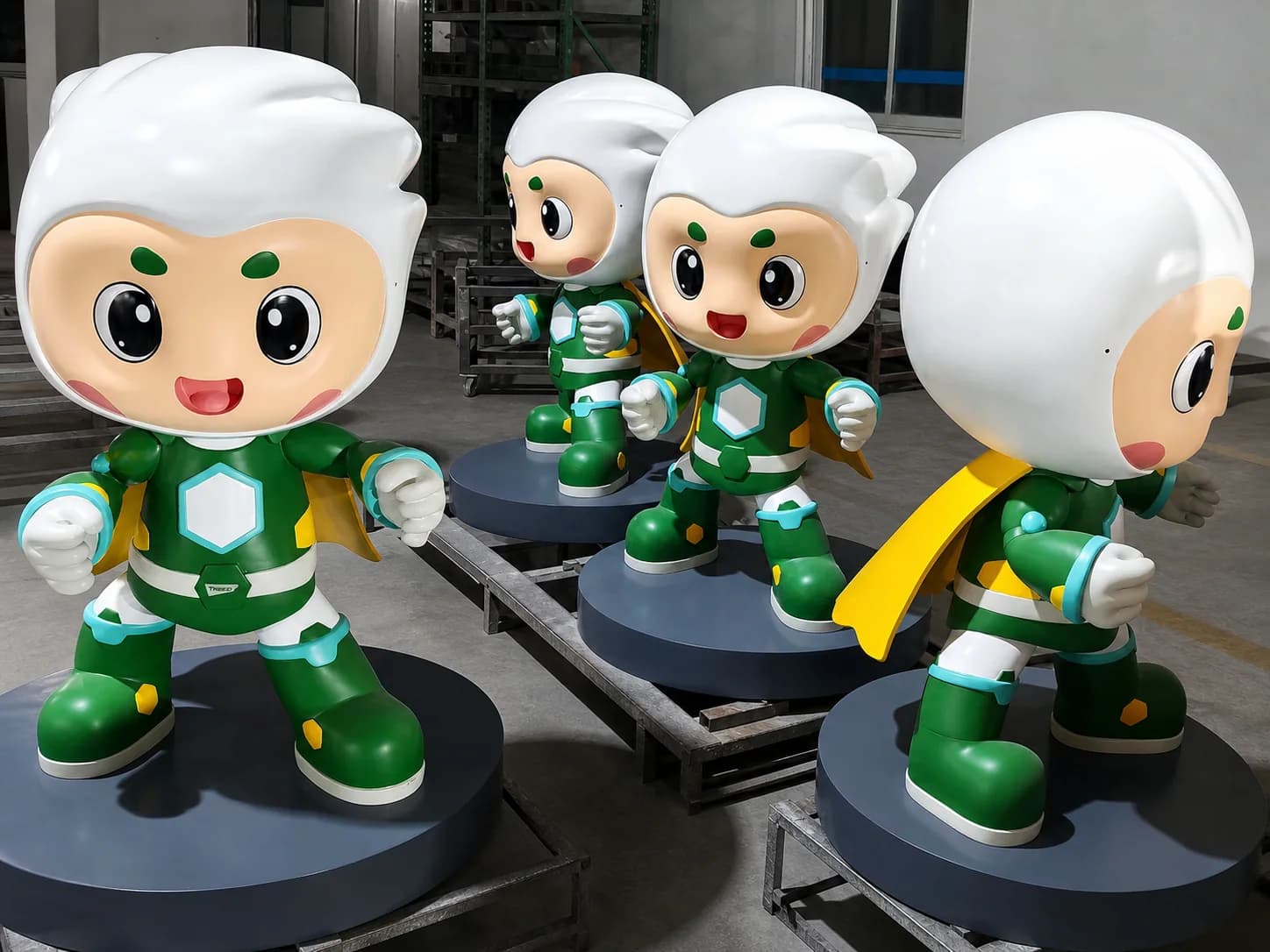
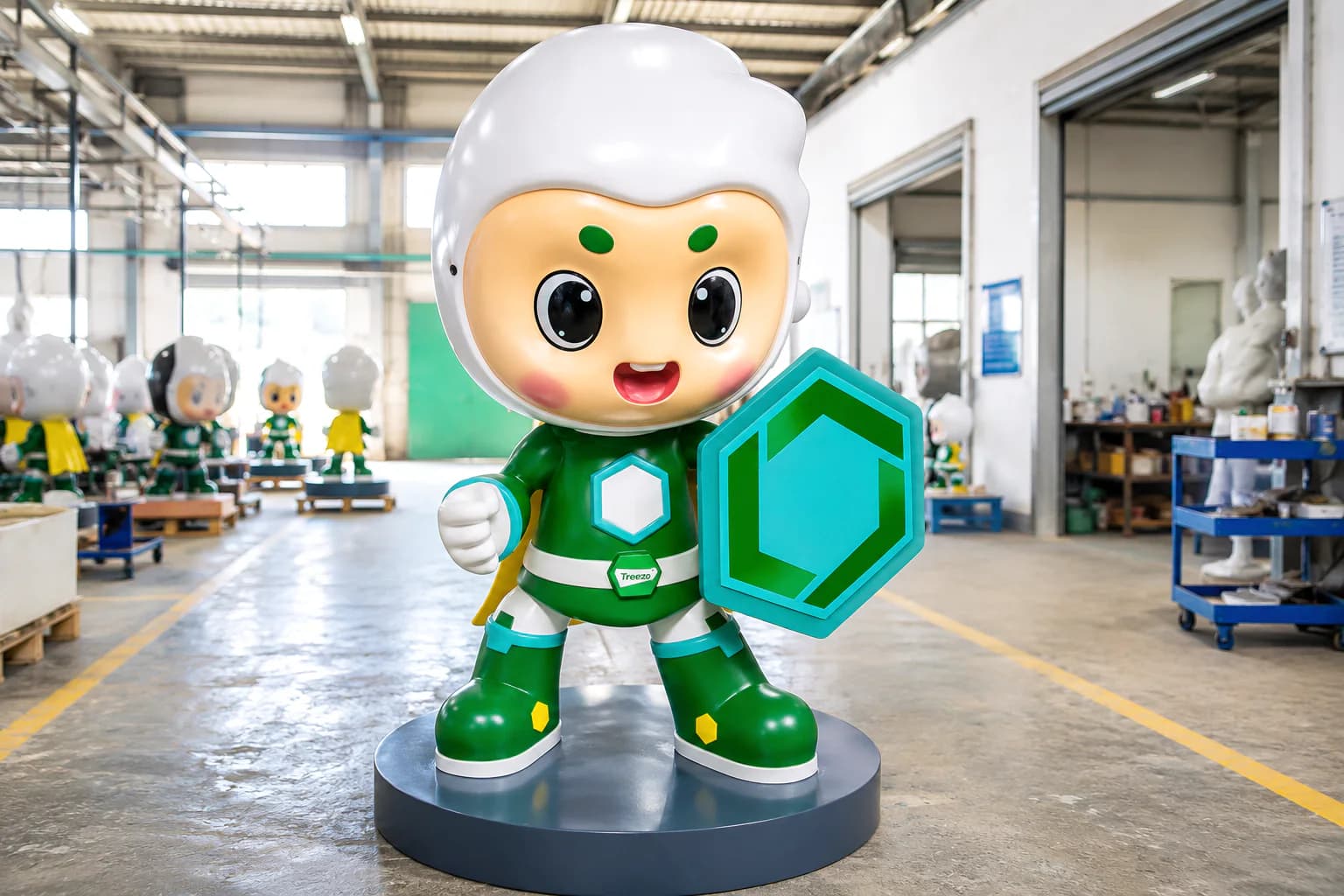
| Quantity | 100 pieces |
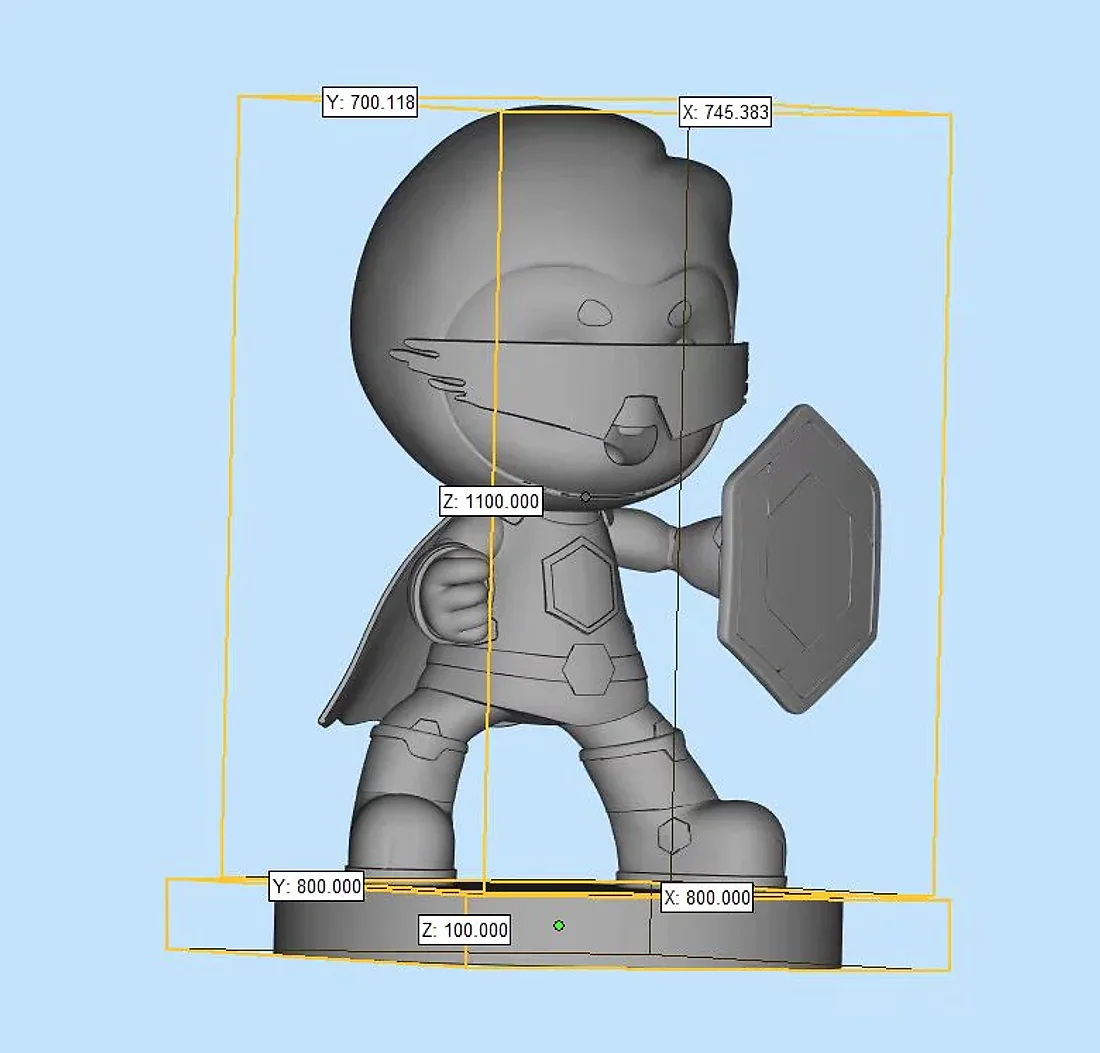
| Finished height | Approximately 1,100 mm, including the circular base |
| Main material | Fiberglass / FRP |
| Production method | Molded repeat production |
| First article | Formal approval using a 3D-printed physical sample |
| Internal structure | No internal metal structure was required |
| Detachable component | Visor |
| Integrated component | Shield |
| QC focus | Seams, surface pinholes, paint overflow and unit-to-unit consistency |
| Delivery | Packed and delivered to Hangzhou, China |
Why approve a physical first article before making 100 units?
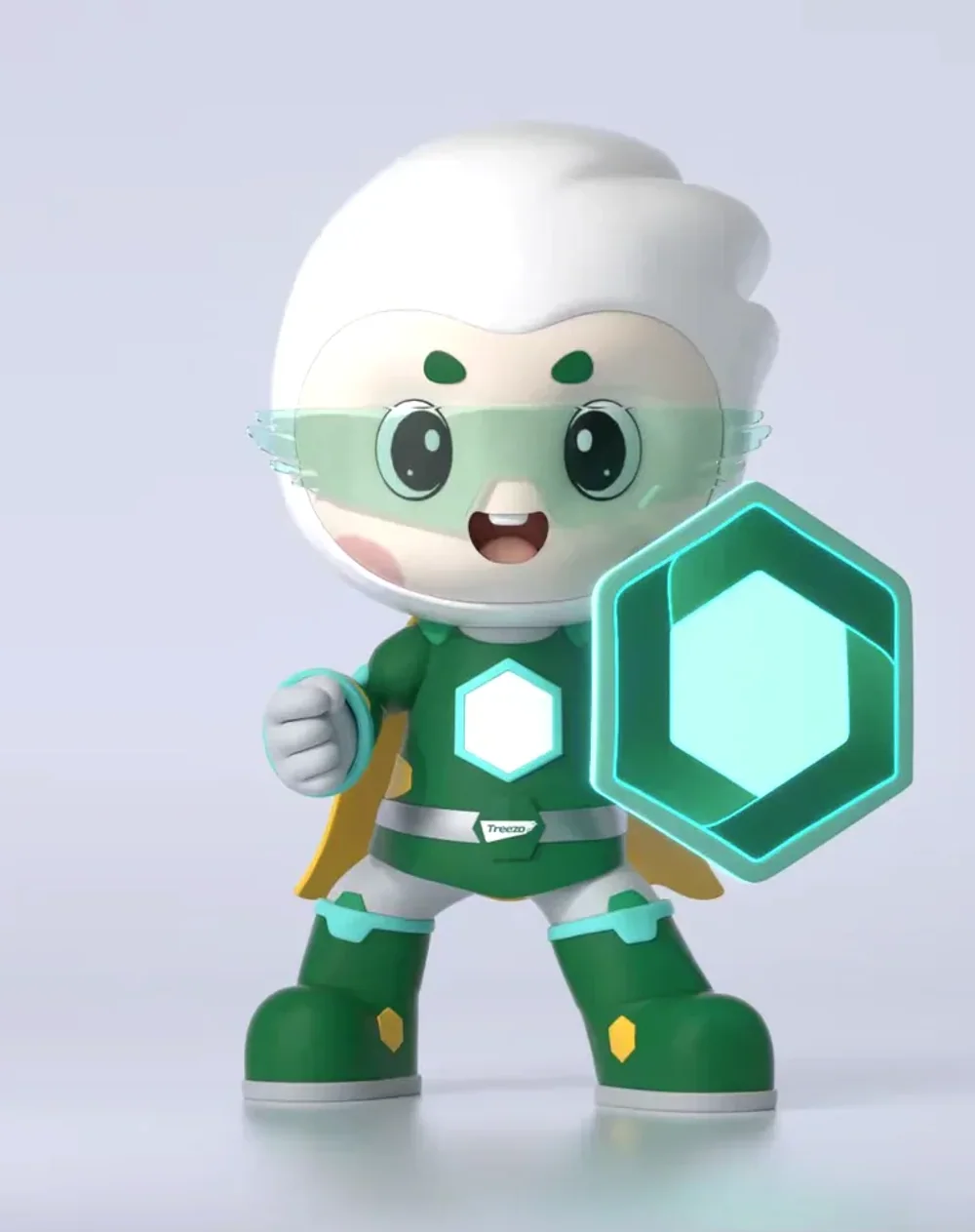
A digital render communicates the character design, but it does not fully show how the mascot will read as a physical object at approximately 1.1 metres high. A first article gives the client and manufacturer a fixed physical reference before repeat production begins.
For the Treezo order, the formal first article was made by 3D printing. This allowed the overall proportions, three-dimensional form and visible details to be reviewed before the project moved into mold-based fiberglass production. Once approved, the first article became the reference for the repeated units.
For buyers, the practical purpose of first-article approval is risk control. A proportion or detail issue is much easier to correct before molds and 100 finished pieces are involved. Approval also establishes a common reference for later checks of shape, color placement and finish.
How was the design prepared for molded fiberglass production?
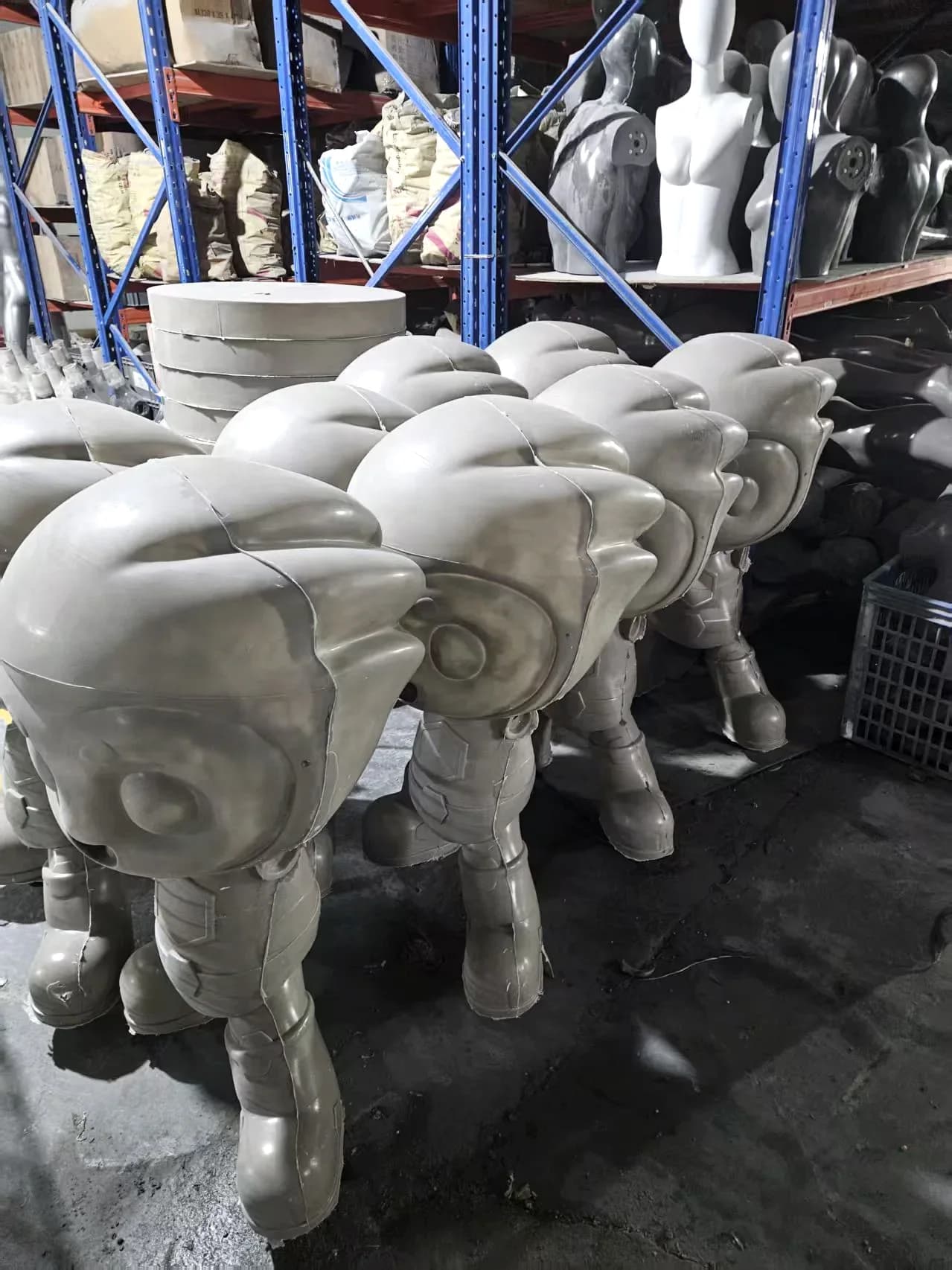
After the physical form was confirmed, the mascot was prepared for molding and repeat production in fiberglass-reinforced plastic, also known as FRP. Molding makes it possible to reproduce the same overall geometry across a multi-unit order while keeping the finished sculptures lighter than comparable solid constructions.
The Treezo mascot did not require an internal metal frame. Internal reinforcement is not an automatic requirement for every fiberglass statue; it depends on factors such as size, geometry, load, installation method and intended environment. In this case, the approximately 1,100 mm form and its production requirements allowed the FRP body to be made without an internal structure.
This decision should be evaluated project by project. Larger sculptures, load-bearing elements, narrow connection points or outdoor installations may require a different structural solution.
How was consistency controlled across 100 mascot statues?
The mold controlled the repeated base geometry, but molding alone did not guarantee a consistent finished batch. Surface preparation, assembly lines, paint boundaries and small character details still required individual attention.
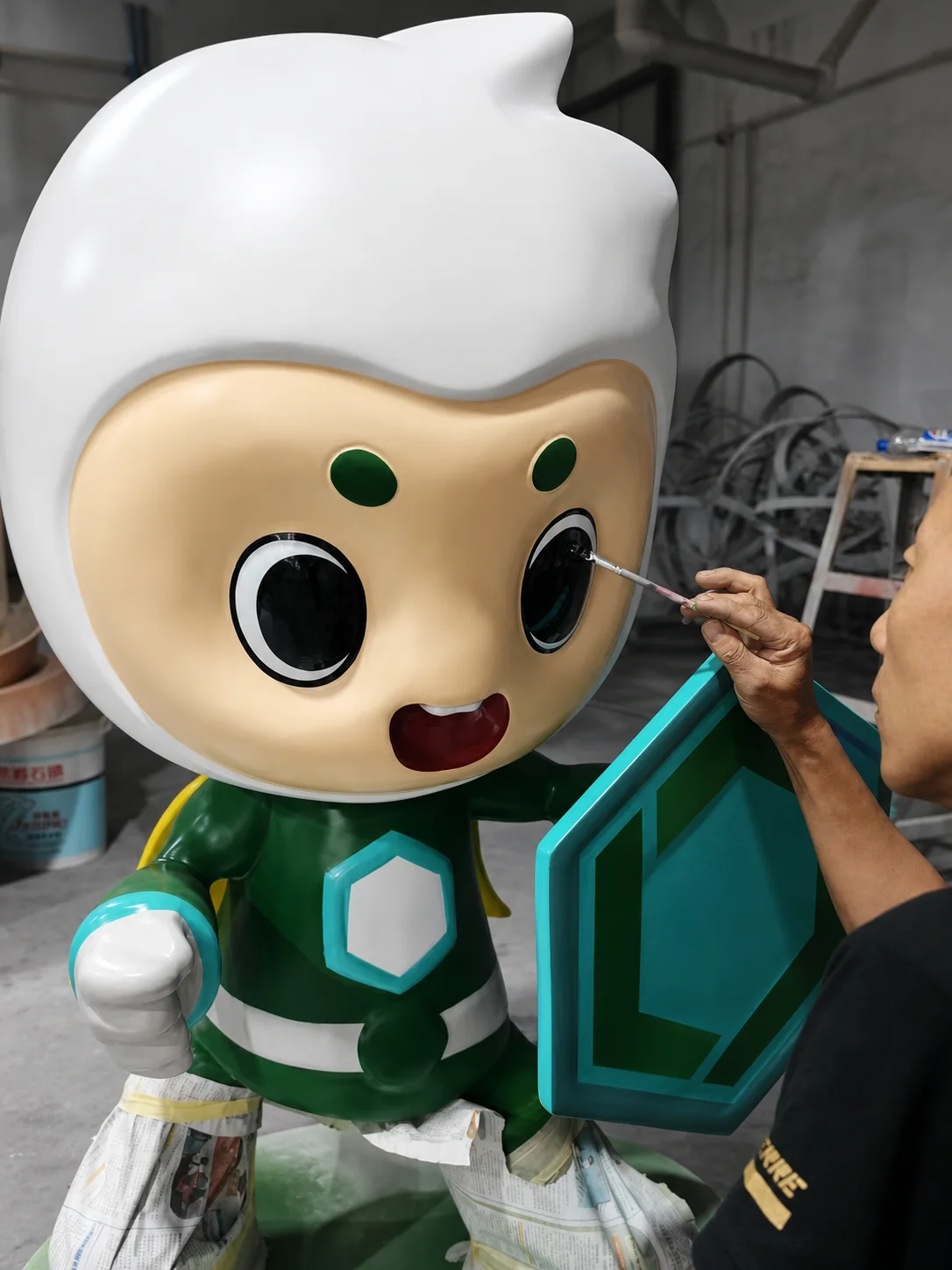
During production, repeated forms were reviewed before final finishing. The finishing team then worked to keep the approved colors and visible character details consistent across the order. This matters especially on mascot sculptures because small variations around the eyes, face and color separations can change the expression even when the overall shape is correct.
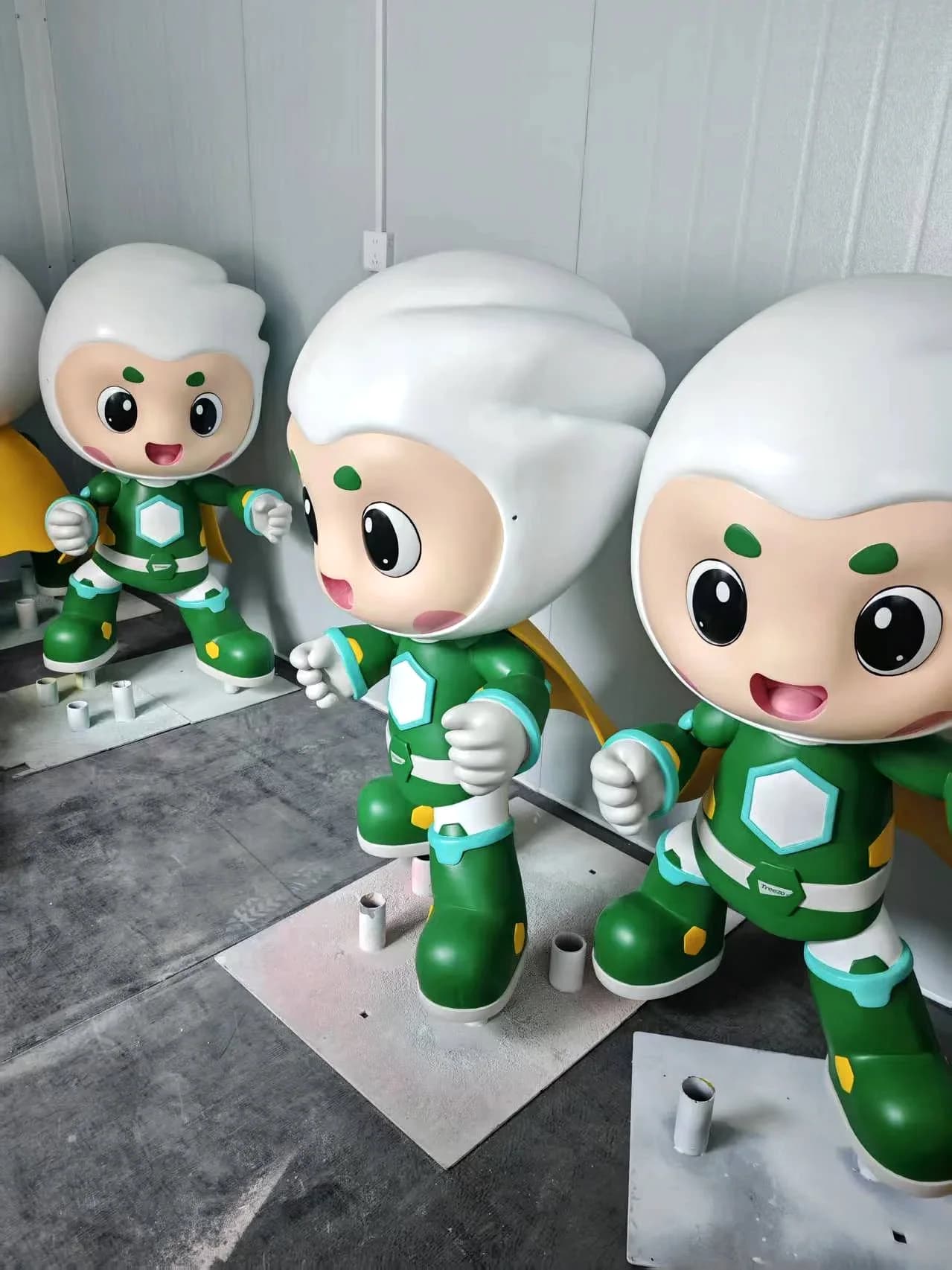
The project therefore combined a repeatable molded form with hands-on finishing and batch comparison. Finished units were not assessed only as separate sculptures; they were also compared with one another and with the approved reference.
Which parts were detachable, and why?
The visor projected from the main form and was more exposed to impact during handling and transport. To reduce this risk, it was produced as a separate component for delivery. YAVIS supplied the required installation screws and an installation video so the recipient could secure it without a complicated site procedure.
The shield followed a different approach. It remained integrated with the mascot body for shipment. Protective cushioning was added around the corresponding contact and impact-prone areas inside the packing.
These two decisions illustrate a useful rule for commercial mascot production: the assembly strategy should follow the geometry and delivery risk of each component. A projecting part may be safer when detached, while another part may be more reliable when it remains integrated and receives localized protection.
What was checked during quality control?
Quality control for the 100-piece order concentrated on visible defects and consistency across the batch. The actual inspection points included:
- 01
Seams: checking joined areas for visible lines or uneven transitions.
- 02
Surface pinholes: identifying small holes that could remain visible after finishing.
- 03
Paint overflow: checking whether one color extended beyond its intended boundary.
- 04
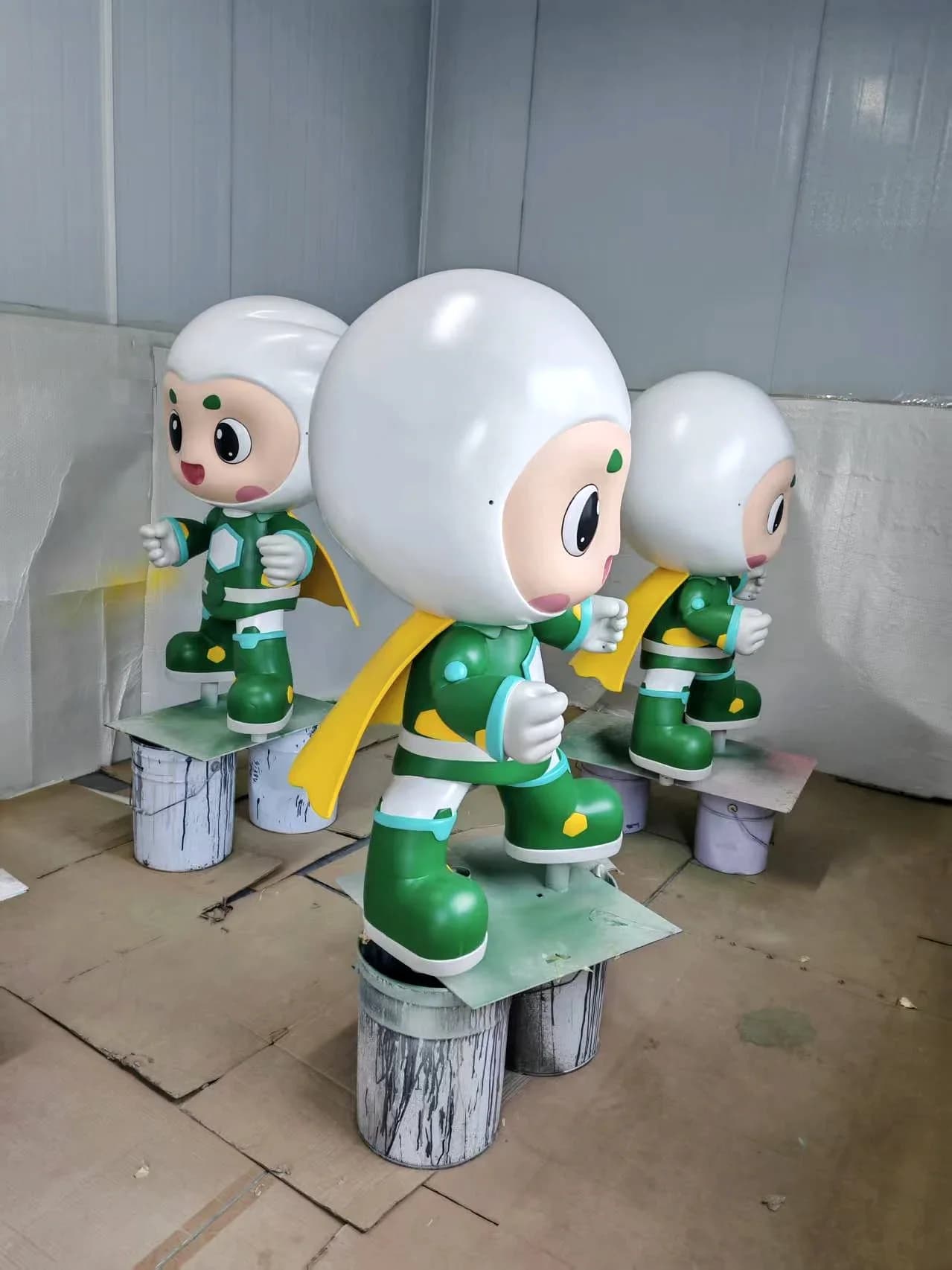
Unit-to-unit consistency: comparing multiple sculptures for consistent form, color placement and overall appearance.
Multi-angle checks were also important because the mascot could be viewed from the front, side and rear. A finished front view alone would not reveal every surface transition or color boundary.
For repeat orders, a practical QC system needs both an approved standard and defined inspection points. “Good finish” is too broad to guide a 100-unit comparison; seams, pinholes, paint boundaries and repeated appearance can be checked more consistently.
How were the mascot statues packed for delivery?
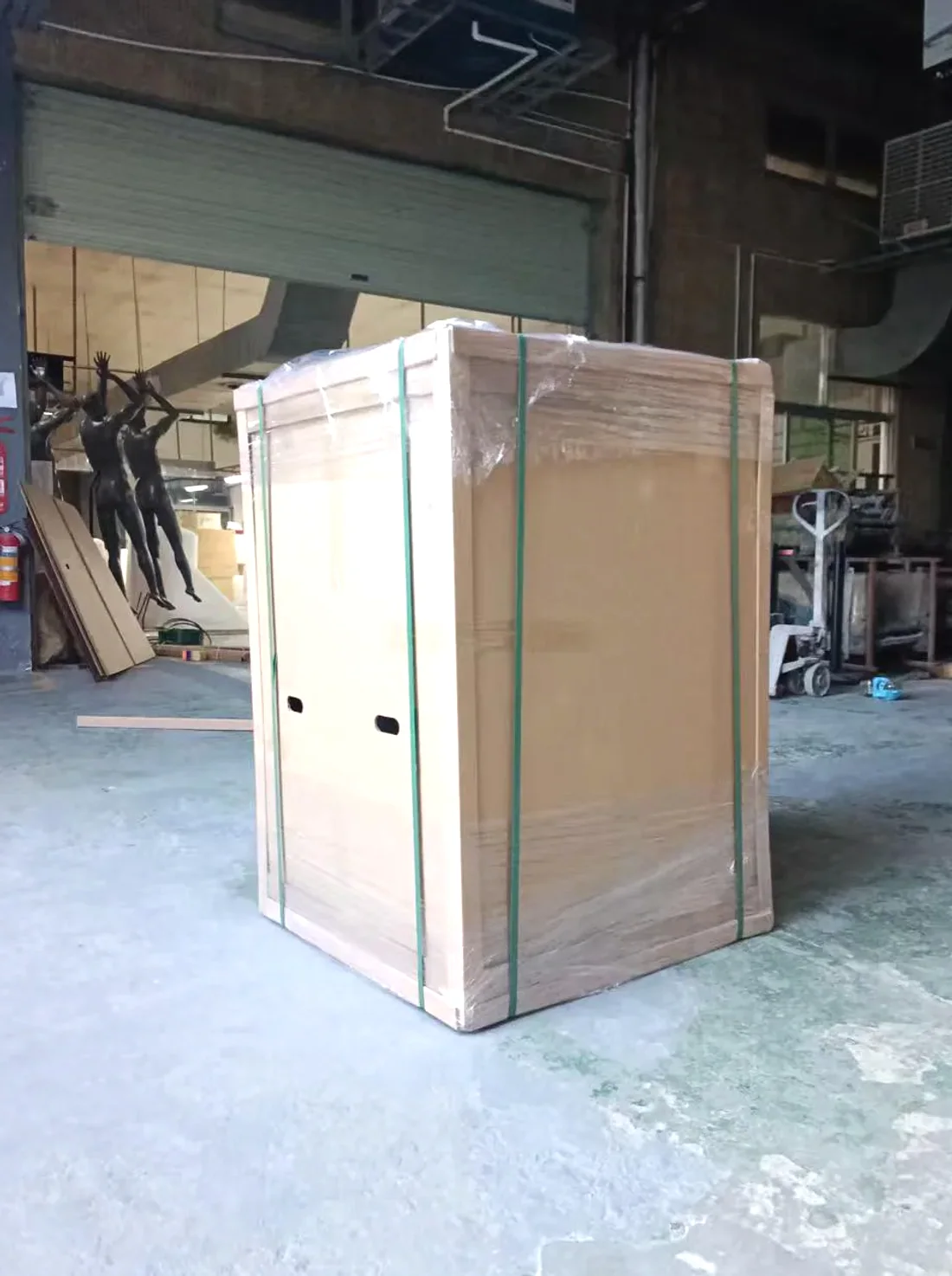
The finished sculptures were packed for domestic delivery to Hangzhou. The packing shown here belongs to the actual 100-piece Treezo order.
Protection focused on the finished surfaces and the parts most likely to receive pressure or impact. The visor was packed as a separate installation component. The integrated shield received targeted cushioning at the relevant positions, while the sculpture body was secured to limit movement during handling.
Although this project was delivered within China, the same planning principle applies to international orders: packing should be designed around the finished geometry, fragile projections, assembly plan and handling route. Export projects may require additional crate, labeling and documentation decisions according to the destination and shipping method.
Frequently asked questions
Is fiberglass suitable for producing multiple mascot statues?
Yes. Fiberglass, or FRP, is commonly suited to molded repeat production because it can reproduce the same main form across multiple units while remaining relatively lightweight. The correct material and reinforcement still depend on size, geometry, use and installation requirements.
Does every fiberglass mascot statue need an internal metal frame?
No. The need for an internal structure depends on the sculpture’s size, shape, loads, installation method and environment. The approximately 1,100 mm Treezo sculptures were produced without an internal metal structure.
Why make part of a mascot statue detachable?
A projecting or vulnerable component may be detached to reduce the chance of transport damage, reduce packing pressure or simplify replacement. The assembly must remain clear for the recipient. In the Treezo project, the visor was supplied separately with screws and an installation video.
How do manufacturers keep 100 mascot statues consistent?
Consistency comes from an approved physical reference, repeatable molds, controlled color references, defined finishing standards and batch comparison. The Treezo QC process specifically checked seams, pinholes, paint overflow and unit-to-unit consistency.
Should the first article be approved before molding?
For a multi-unit custom order, approval before full repeat production reduces the risk of carrying a proportion, form or detail error across the complete batch. The approval method can vary by project; this order used a 3D-printed physical first article.
From one approved mascot to a controlled production order
The Treezo project shows that repeat mascot production depends on more than copying one shape 100 times. The result came from establishing a physical reference, selecting a suitable fiberglass construction, planning vulnerable parts for delivery, defining specific QC points and packing the finished sculptures around their geometry.
YAVIS manufactures custom mascot statues and character sculptures from client designs, renders, 3D files and reference materials. Projects can begin with one commercial display piece or progress into repeat production when quantity and rollout requirements are confirmed.
Related project: Treezo Mascot Sculptures — 100-Unit Production
Related capability: Custom Sculpture Manufacturing Capabilities
Planning a mascot or character project? Send your files and project requirements for an initial production review.